1990
In early 1990, he approached the Secretariat for Urban Planning, Construction and Housing Affairs of the Municipality of Subotica with a request for a permit to establish a communal funeral enterprise. (President of the Municipal Executive Council: Dragan Božinović.) The Municipal Secretariat rejected the request on 8 May 1990, citing that only a few months earlier (on 28 December 1989) the Communal Public Funeral Enterprise had been established to carry out that very same activity. (Signatory: Dragan Šelić, secretary.) (The defence of the state funeral enterprise's monopoly lasted a long time. Citizens paid dearly for it. For example, in 1992 the public enterprise raised the ten-year lease of a burial plot from 1,500 to 5,000, and the lease of a crypt from 2,000 to 6,000 dinars.) An appeal against the municipal decision was filed with the competent provincial secretariat on 17 May 1990. The appeal stated that under the Law on Enterprises, private companies with other forms of business were on an equal footing in the market. The provincial authority annulled the municipal decision on 8 June 1990 and returned it for reconsideration.
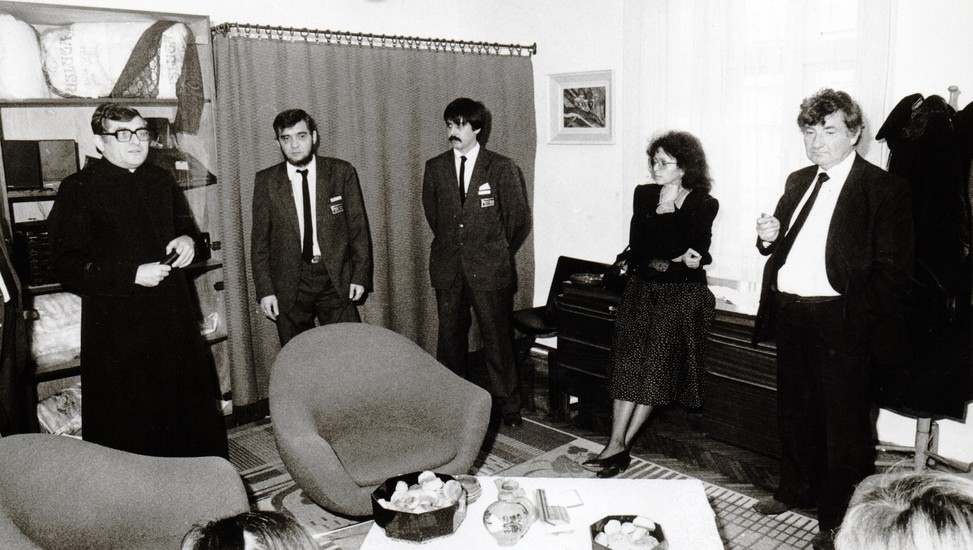
The question of Funero's establishment was reconsidered by the Subotica municipal secretariat on 13 August 1990 — and rejected once again. This again made it possible to appeal to the provincial level... (The authorities tenaciously defended the self-rule of the public enterprise. Market competition was not welcome, even though Yugoslav Prime Minister Ante Marković had by then already announced and was pursuing a world-oriented economic policy.) In the meantime, it had been possible to draw the attention of the Belgrade authorities to this case of Subotica's defence of monopoly (Prime Minister: Ante Marković; Minister of Industry and Mining was Subotica native Stevan Santo), so the government proposed, and the federal assembly accepted, an amendment to the Law on Enterprises, under which private enterprises could also carry out communal public services. This effectively "took" the decision-making power out of the hands of narrow-minded municipal authorities and transferred it to the jurisdiction of commercial courts. (Something similar happened, in a different form, 25 years later!)
Under file number fi. 1263/90, the District Court in Subotica registered the company Pogrebno preduzeće p. o. Funero Temetkezési Vállalat t. f. Subotica – Szabadka on 3 September 1990. Primary activity: 100 392 Funeral services, arrangement and maintenance of cemeteries. (Registrar judge: Ištvan Sakač.)
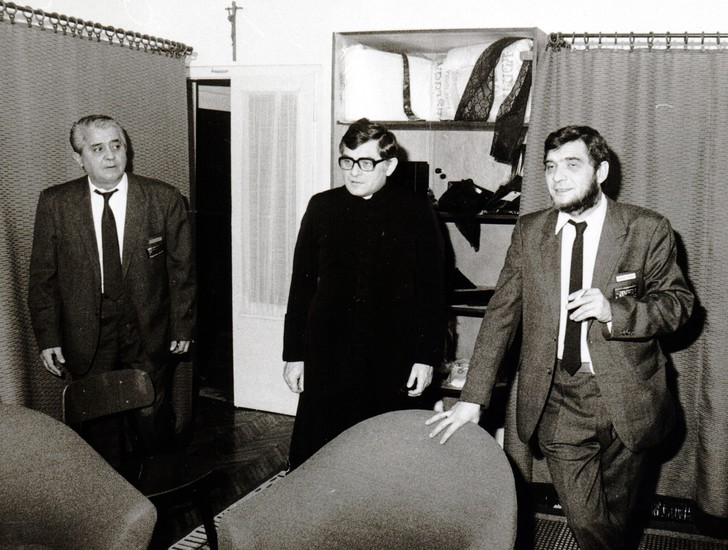
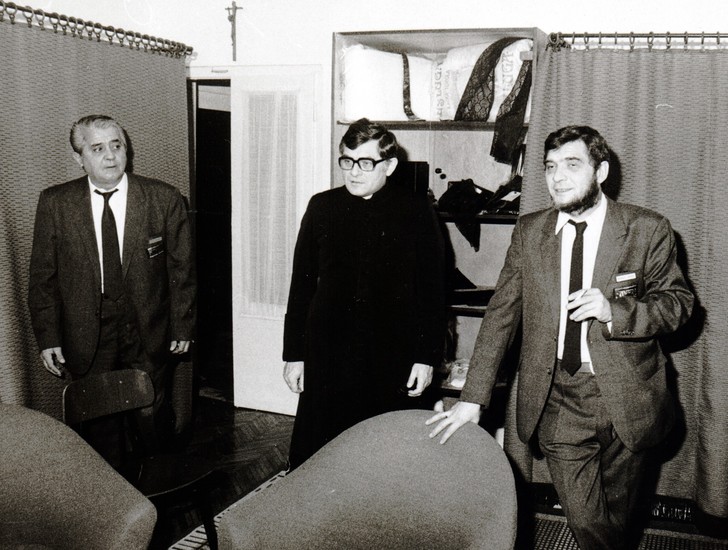
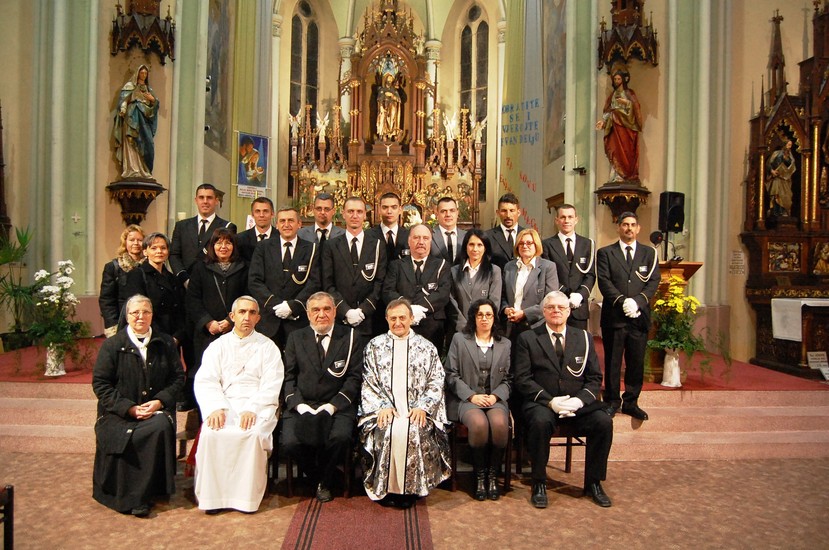
On 2 November 1990 (symbolically, on All Souls' Day itself), Funero's shop opened in Subotica at Karađorđev put 1 (the former Sadecki house). Activities: sale of funeral equipment, transport of the deceased, and funeral ceremonies. The traders and transporters of the deceased wore grey, tailor-made uniforms, white shirts and black ties, and uniformed caps. The ceremony masters wore modern black uniforms adorned with braided trim, white shirts and black ties, and white gloves. Everyone was required to work soberly and with reverence, and to be at the service of clients. Of course, everyone had to know the two languages of the region — Serbian/Croatian and Hungarian. Our prices were not much cheaper than those of other companies (nor were they later), but in terms of quality we represented a surprising novelty, which people quickly noticed and spread by word of mouth. Since the state funeral enterprise treated its clients rather casually (a result and consequence of decades of monopoly) and made no effort to accommodate them, more and more people chose Funero.
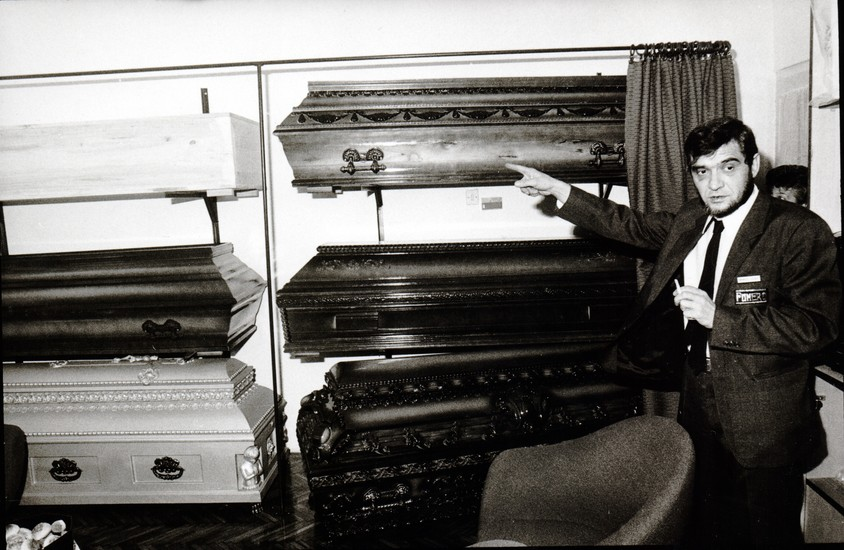
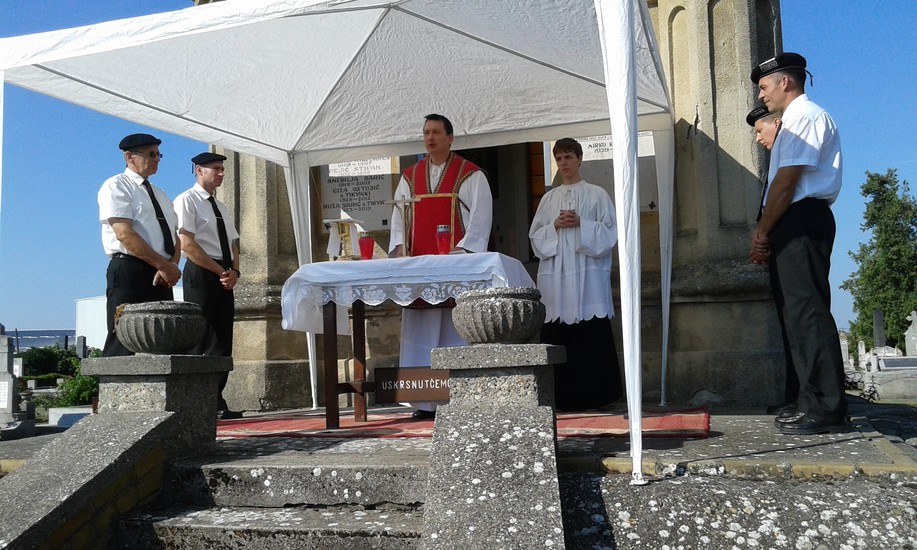
The Subotica Parish of Saint Teresa of Ávila — as owner of the church section of the Bajski cemetery — had until then been compelled to work with the state funeral enterprise. They were dissatisfied, both with the standard of funerals and with the maintenance of the cemetery (to be precise: burials were carried out, but nothing was done in the interest of maintaining the cemetery). The church authorities were glad to be rid of them. In November 1990, the Parish of Saint Teresa of Ávila entered into a contract (confirmed by the diocese on 11 November 1990) entrusting Funero fully with burials in its section of the cemetery, as well as its maintenance. For its part, Funero agreed to maintain the cemetery free of charge and to contribute to investment costs. In collaboration with the parish, work began on arranging and developing the church cemetery on Bajski put. Fifty trailers of rubbish were removed, regular grass mowing was introduced, the chapels were renovated, roads were built, the bell was reinstalled in the Peić chapel, new family vaults were constructed on what had previously been a clover field and in the open spaces between existing crypts (where rubbish had mostly been dumped), and we marked and regularly cleaned the waste disposal sites.
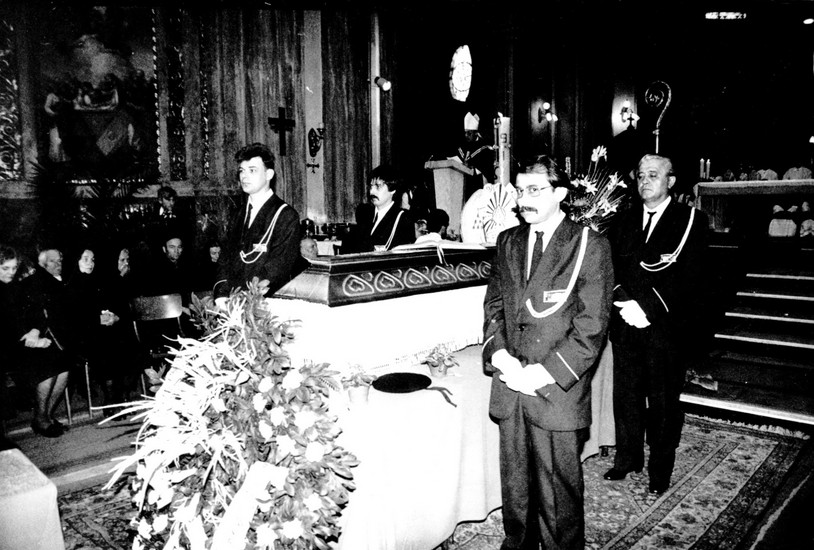
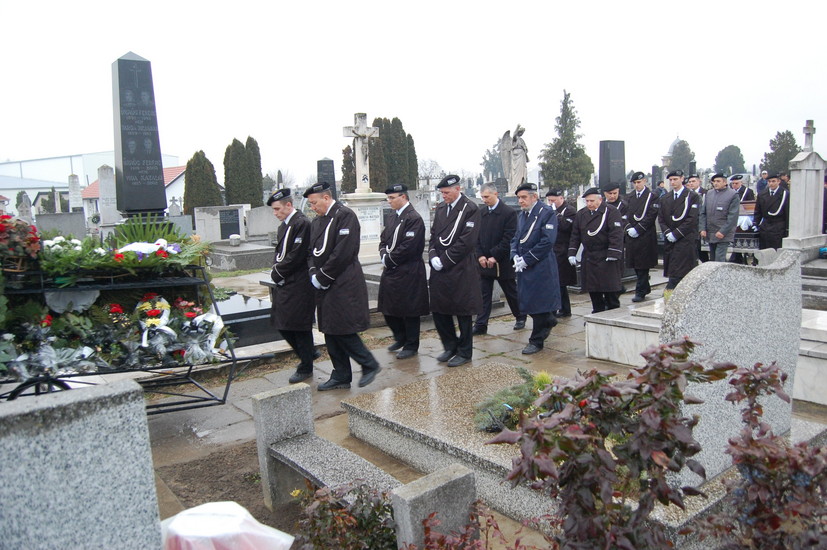
Of fundamental importance, and far more significant: we introduced a new, dignified funeral ceremony. Forty-five minutes before the funeral, four ceremony masters arrive, each presenting a flower to express condolences to the family, enquiring whether they have any requests, and setting quiet music playing, audible both inside the chapel (mortuary) and in front of it. We do not carry out a burial without a farewell even for those who have not invited a priest and where no one addresses those gathered. In such cases, a Funero employee delivers a brief, fitting farewell message — something that had not happened before. The ceremony masters wear black suits, caps and shoes, and work in white shirts and gloves. Each carefully observed the ceremony, sober, and was required to attend to his appearance: hair and beard neat, shaved that morning — not the night before — shoes clean, and suit tailor-made. We paid special attention to the care and arrangement of flowers. The "state" workers would break them, throw them aside — we respected the money spent on wreaths. Ceremony masters could hold only one wreath at a time, two bouquets at most. We did not receive flowers at the entrance; we waited for them to be brought in and only then took them over (so they would be visible to the family). The most important part was the arrangement on the grave or crypt: small bouquets were placed at the bottom, larger bouquets above, and wreaths only at the top. We paid special attention (based on the ribbons on the wreaths) to ensuring that the wreaths from the deceased's closer relatives were placed in more visible positions, and that the family's wreath was given the central place. Attending to form, we positioned the ribbons so they were not crumpled but could be read from the side. (Thanks to the improvements in quality, Funero soon gained the right to conduct burials — and partly the maintenance of cemeteries — at the church cemeteries in Horgoš and Bajmok, as well as at the church and state cemetery in Martonoš and the state cemetery in Male Pijace. The people of Subotica welcomed the quality improvements with satisfaction and increasingly requested that Funero conduct funerals — and that it bury their loved ones at other cemeteries as well.)
1991
In December 1991, Funero approached the Public Communal Enterprise Pogrebno with a request that private funeral enterprises also be permitted to carry out funeral ceremonies at state cemeteries with their own ceremony masters (which were, it is true, in state ownership, but the right of use was held by this public enterprise).
1992
The management board of the public enterprise Pogrebno rejected Funero's request in its entirety on 22 January 1992. On 24 February 1992, Funero approached the Assembly of the Municipality of Subotica with a request that it review the existing decision on burials and, in the interest of citizens, permit every funeral enterprise or entrepreneur to carry out the ceremony on equal terms — specifically: bringing the deceased out of the mortuary, and carrying in and arranging flowers. The public enterprise should retain as its monopoly: the actual burial, collection of fees for the lease of burial plots, maintenance of cemeteries, and the exclusive right to construct family vaults. The Subotica municipal government was in no hurry to address the matter. Citizens were turning to Funero with increasing trust, asking them to handle at least what they could — transportation and funeral accessories. At the same time, they were demanding the right to have Funero conduct the funeral ceremony.
1993
In 1993, the Subotica municipal government (President of the Municipal Assembly: Jožef Kasa; President of the Executive Council: Imre Kern) chose a solution unique in the country at that time: it organisationally restructured the Public Communal Enterprise Pogrebno. (Later in our country "restructuring" became fashionable, but at the state level, Subotica was the first good example.) It was decided that the public interest was: every person should have a place for their eternal rest, there should be someone to take care of burials, fees for the lease of burial plots should be collected, and cemeteries should be maintained and developed. Let the public enterprise handle that. Everything else should be on a market basis.
Thus, from the former public enterprise, the Social Enterprise Urna was created, which carried out the same activities as private enterprises: sale of funeral equipment, transport, and ceremony. They did not start from scratch, as they received all necessary equipment, stock, vehicles, storage, uniforms, and specialists. (People accustomed to monopoly were unable to successfully copy Funero, although it would not have been difficult. So Urna failed, and during privatisation was sold for 790 dinars.) The Social Enterprise Kamenoresci was also spun off as a market participant. It too did not survive — it was privatised, then closed. (This means that cemeteries were poorly maintained because during the monopoly period, the funds intended for that purpose were used to subsidise other activities.) Funero set in motion a process that "shook up" even the public enterprise! They then followed its example: state cemeteries were also much better maintained, more than one employee with a fondness for drink was "taken out of circulation", and staff became more courteous toward clients...
1994
From 1994 to 2011, burial services in Subotica were organisationally sound, reasonably priced, client-oriented and respectful — everything operated in the interest of consumers, both from the public enterprise and from private firms. Clients could freely choose (Funero, Urna, Corpus, Fiducija, etc.), and whichever funeral enterprise they approached, they could arrange everything in one place! Every funeral enterprise, in (telephone) agreement with the public enterprise, issued a burial order to the gravedigger and collected the fees — clients therefore did not need to go from place to place. The system functioned excellently for sixteen years, without a single failure or mistake on anyone's part! And most importantly: citizens were satisfied with the freedom of choice, the quality, and the prices.